How to Build a Beginner-Friendly Italian Antipasto Board
A good antipasto board looks like it took effort. It usually didn't. What it took was a short shopping list, a sharp knife and the discipline to stop adding things. In Italy, antipasto is not a buffet; it is the opening sentence of the meal, something to pick at while the pasta water comes to the boil. That distinction matters when you are starting out. You are not building a wall of food. You are setting out four or five things that taste good together and letting people help themselves.
The good news is that almost nothing here requires cooking, and what does require cooking takes ten minutes. You need a board, a few small bowls, and a shop nearby that sells decent cheese.
Antipasto boards work when four categories are present: something cured, something milky, something sharp or vinegary, and something starchy. Fat, salt, acid, bread. Once you accept that frame, shopping becomes a series of small decisions instead of a scavenger hunt.
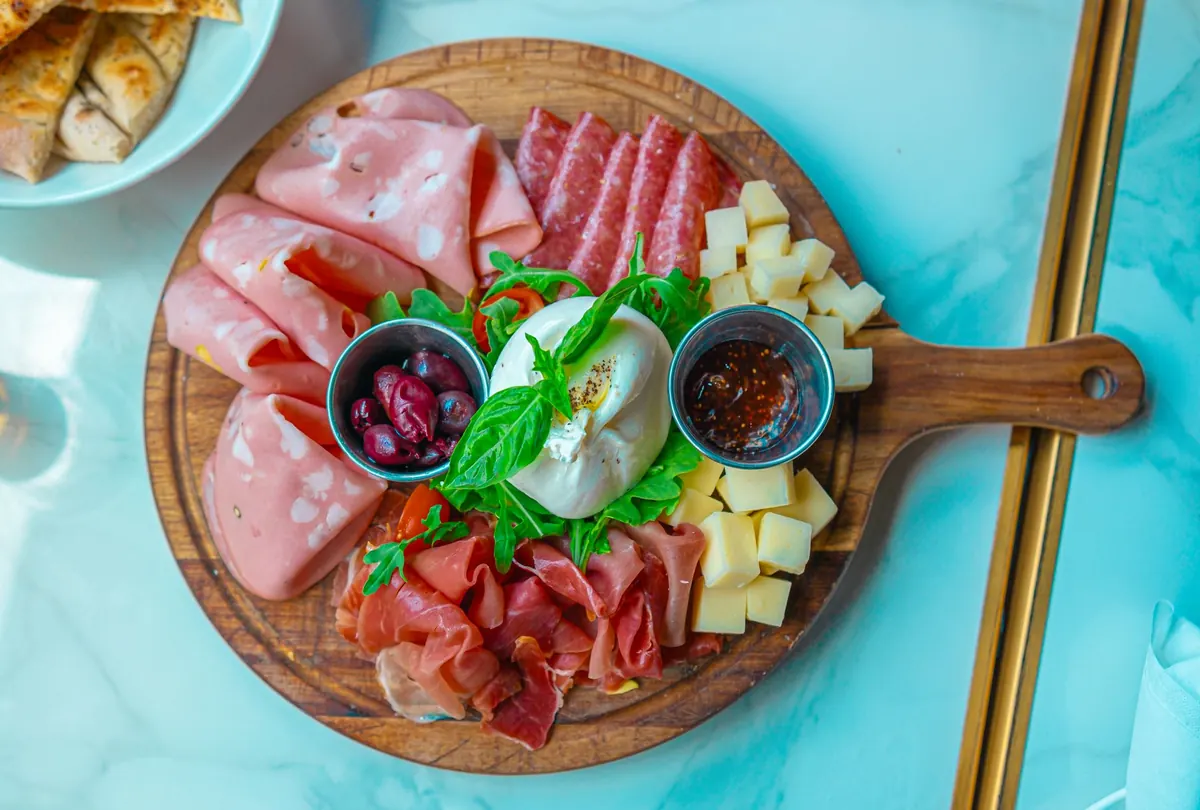
Aim for two cured meats, two cheeses, three vegetables and one bread. That is eight items, which is plenty. Six items on a board reads as generous and considered. Sixteen reads as a deli counter, and people eat less, not more, because the choice is exhausting. If you are feeding six people, resist the urge to buy a ninth thing; buy a little more of the eight you have.
Two is the number. Pick one delicate and sweet, and one bolder. Prosciutto crudo or bresaola on one side; a fennel-scented finocchiona, a coppa or a good salame on the other. Mortadella is a fine third if you want something soft and mild for people who find cured meat too intense.
Ask the person at the counter to slice it thin. Prosciutto should be almost translucent; salame can be a touch thicker so it holds together. Freshly sliced makes a real difference. Meat that has sat in tight plastic for days sweats, sticks together and tastes flat. If you must buy ahead, keep it wrapped in paper in the fridge and bring it out twenty minutes before serving. Cold fat tastes of nothing.
Do not lay slices flat in neat overlapping rows. Fold each slice loosely and drape it, so the meat looks like fabric rather than a stack of cards. Loose folds catch the light, are easier to pick up, and make three ounces of prosciutto look like far more than it is.
Two cheeses with some distance between them is more interesting than four that taste alike. A hard, salty one — Parmigiano Reggiano broken into rough shards, or a pecorino if you want something sharper and sheepier. Then a soft one: taleggio, robiola, a spoonable gorgonzola dolce, or fresh mozzarella if the board is being eaten within the hour.
Take the cheese out of the fridge thirty to forty-five minutes before serving. This is the single most repeated piece of advice about cheese and the one most often ignored. Cold cheese tastes like cold butter.
Cut each one according to its texture. Hard cheese in shards or thin slices, soft cheese left whole with a small knife beside it, anything runny in a shallow bowl. Add one sweet thing to sit next to the blue or the taleggio: a spoonful of honey, a little mostarda, a few dried figs.
This is where beginners underdeliver, and where a board either comes alive or turns into a plate of salty fat. You need something vinegary, something marinated, and ideally something raw and crunchy.
Drain everything properly and pat it dry. Wet vegetables leak onto the board, soak the bread and make the whole arrangement look tired. Anything oily or briny belongs in a bowl, not directly on the wood.
Focaccia cut into fingers, a ciabatta torn into chunks, taralli, grissini, or thin crostini. Day-old bread is fine: brush it with olive oil and griddle it for a minute each side. Put good olive oil in a small jug with a pinch of salt, and let people dip.
Three extras are enough: a handful of almonds or walnuts, a small bunch of grapes or a few dried figs, and honey. Nuts fill gaps, fruit lightens the salt, and honey flatters the cheese. Beyond that you are decorating, not feeding anyone.
Leave a little empty space. A board packed edge to edge looks like a shop display and gives nobody room to move pieces around.
For a starter ahead of a pasta course, plan on roughly four to six slices of meat and a few pieces of cheese per person, plus more bread than you think you need. If the antipasto is effectively the first course of a light meal, be more generous. If a big primo is coming, hold back.
Prep the components early — slice, drain, cut, arrange in bowls — then assemble at the last minute. Clear the board before the next course arrives. Antipasto is a course, not a permanent fixture, and the meal should feel like it is moving somewhere.
To drink, a dry white, a light red or a glass of prosecco will all do the job; nothing on the board is fussy enough to demand a pairing. And keep the whole thing in proportion. The best antipasto board is the one you can put together on a Tuesday, with what the shop actually had, without wishing you had bought prosciutto from somewhere else.
Photo: Arian Fernandez / Pexels
Previous Post
Seasonal Italian Citrus Guide: What to Buy Month by Month
Next Post
Espresso vs. Cappuccino: When Italians Actually Drink Each